



As a supplier of frozen rats, I understand the critical importance of handling these products with the utmost care to prevent cross - contamination. Cross - contamination can lead to a variety of issues, including the spread of diseases, spoilage of products, and a loss of customer trust. In this blog post, I will share some of the key practices I follow to handle frozen rats safely and avoid cross - contamination.
1. Facility and Equipment Hygiene
The first step in preventing cross - contamination is to maintain a clean and hygienic facility. Our storage and handling areas are designed to meet strict sanitation standards. Floors, walls, and ceilings are regularly cleaned and disinfected to eliminate any potential sources of bacteria or pathogens. We use food - grade cleaning agents that are effective in killing a wide range of microorganisms while being safe for contact with the frozen rats.
Our equipment, such as freezers, conveyors, and storage racks, is also regularly inspected and maintained. Freezers are kept at the appropriate temperature to ensure the frozen rats remain in a safe and stable condition. They are calibrated regularly to prevent temperature fluctuations that could compromise the quality of the product. Any equipment that comes into contact with the frozen rats, like tongs and trays, is washed and sanitized between uses. This reduces the risk of transferring contaminants from one batch of frozen rats to another.
2. Personal Protective Equipment (PPE)
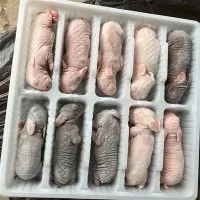
Proper use of personal protective equipment is essential when handling frozen rats. All of our employees are required to wear gloves, masks, and hairnets. Gloves act as a barrier between the hands and the frozen rats, preventing the transfer of bacteria from the skin to the product. We use disposable gloves that are changed frequently, especially when moving between different batches or handling different types of frozen rats, such as Arctic Mice Frozen Rats, Pinks Rats, and Pinks Mouse.
Masks help prevent respiratory droplets from being released onto the product. This is crucial as respiratory secretions can carry various pathogens. Hairnets are worn to keep hair from falling into the product, which could not only be a physical contaminant but also a carrier of bacteria.
3. Separation of Different Product Types
To avoid cross - contamination, we strictly separate different types of frozen rats. Each type has its dedicated storage area within the freezer. This separation is based on factors such as size, age, and species. For example, the storage area for Pinks Rats is distinct from that of Arctic Mice Frozen Rats. This prevents any potential transfer of contaminants that could occur if different types of frozen rats were stored together.
When it comes to handling during packing and shipping, we also ensure that different types of products are not mixed. Separate packing stations are used for each product line, and all equipment and containers are labeled clearly to indicate the specific type of frozen rat they are intended for.
4. Handling Procedures
Our handling procedures are carefully designed to minimize the risk of cross - contamination. When removing frozen rats from the freezer, we use dedicated tools for each type of product. This ensures that there is no transfer of residue or bacteria from one type of frozen rat to another.
During the packing process, employees are trained to handle the frozen rats gently and quickly. They are instructed not to touch other surfaces or objects unnecessarily while handling the product. Any spills or leaks are cleaned up immediately using appropriate cleaning solutions. Employees are also trained to avoid cross - contact between the product and their personal belongings, such as phones or wallets.
5. Employee Training
Regular training is provided to all employees involved in the handling of frozen rats. The training covers topics such as proper hygiene practices, the importance of preventing cross - contamination, and the correct use of PPE. New employees undergo a comprehensive onboarding program that includes hands - on training in the facility.
We also conduct refresher training sessions periodically to ensure that all employees stay up - to - date with the latest best practices. These training sessions often include case studies and real - life examples of cross - contamination incidents to emphasize the potential consequences.
6. Quality Control Checks
Quality control checks are an integral part of our process to avoid cross - contamination. We conduct regular microbiological tests on the frozen rats to detect the presence of any harmful bacteria or pathogens. Samples are taken from different batches at various stages of the production and storage process.
In addition to microbiological tests, we also perform visual inspections. Any frozen rats that show signs of damage, such as tears in the packaging or physical deformities, are removed from the batch. This helps to ensure that only high - quality, uncontaminated products are sent to our customers.
7. Traceability
Traceability is another important aspect of preventing cross - contamination. Each batch of frozen rats is labeled with a unique identifier. This allows us to track the product from the moment it enters our facility to the moment it is shipped to the customer. In the event of a cross - contamination incident, we can quickly identify which batches are affected and take appropriate action, such as recalling the product.
The traceability system also helps us to identify any potential sources of contamination. By analyzing the movement and handling of each batch, we can pinpoint where a problem may have occurred and implement corrective measures to prevent it from happening again.
Conclusion
Handling frozen rats to avoid cross - contamination is a multi - faceted process that requires strict adherence to hygiene standards, proper use of PPE, separation of product types, well - defined handling procedures, employee training, quality control checks, and traceability. By following these practices, we can ensure that our customers receive high - quality, safe frozen rats.
If you are interested in purchasing our frozen rats, whether it's Arctic Mice Frozen Rats, Pinks Rats, or Pinks Mouse, we welcome you to contact us to discuss your procurement needs. We are committed to providing the best products and services to meet your requirements.


References
- Food and Drug Administration. (Year). Guidelines for the Safe Handling of Frozen Food Products.
- World Health Organization. (Year). Hygiene Practices in the Food Industry.
- Institute of Food Technologists. (Year). Best Practices for Preventing Cross - Contamination in Frozen Food Production.