



Can frozen rabbits be used in forensic investigations?
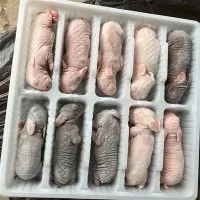
As a supplier of frozen rabbits, I've often encountered various inquiries about the uses of our products. While most of our customers are interested in Frozen Rabbits for Reptiles or Frozen Rabbits for Snake Food, there's an emerging question that has piqued my curiosity: Can frozen rabbits be used in forensic investigations?
Forensic investigations are a complex and multi - faceted field that rely on a wide range of evidence and tools to solve crimes, understand accidents, and uncover the truth. The use of animals in forensic studies is not entirely new. Small mammals, in particular, have been used as models in many forensic research projects.
The Science Behind Forensic Use of Animals
In forensic science, animals can serve as analogs for human bodies in certain scenarios. For example, they can be used to study the decomposition process, which is crucial for estimating the time of death in human cases. When a body decomposes, it goes through a series of predictable stages influenced by factors such as temperature, humidity, and the presence of insects. By studying the decomposition of animals under controlled conditions, forensic scientists can develop models to predict how long a human body has been deceased.
Frozen rabbits, with their relatively small size and biological similarity to humans in some aspects, could potentially be valuable in these types of studies. When a rabbit is frozen, the decomposition process is halted. Once thawed, the decomposition resumes, allowing scientists to start the observation at a known point. This controlled start can provide more accurate data compared to using non - frozen specimens.
Advantages of Using Frozen Rabbits
One of the main advantages of using frozen rabbits in forensic investigations is the ability to store them for long periods. This is especially useful for research projects that require multiple specimens over an extended time frame. Our Whole Frozen Rabbit products are carefully prepared and stored at optimal temperatures to ensure their integrity until they are needed for research.
Another advantage is the consistency. Our frozen rabbits are sourced from a controlled environment, which means that they have similar genetic backgrounds and living conditions. This consistency can reduce the variability in research results, making the data more reliable. For example, if a forensic scientist is studying the effects of a particular toxin on tissue degradation, using rabbits with similar genetic and environmental backgrounds can help isolate the effects of the toxin more accurately.


Potential Applications
Decomposition Studies
As mentioned earlier, frozen rabbits can be used to study the decomposition process. By thawing the rabbits at different intervals and observing the changes in their tissues, forensic scientists can create detailed decomposition timelines. These timelines can be used to estimate the post - mortem interval (PMI) in human cases. For example, if a human body is found in a similar environment as the rabbit study, the decomposition timeline developed from the rabbit research can be used as a reference to estimate how long the human has been dead.
Toxin and Drug Studies
Frozen rabbits can also be used to study the effects of toxins and drugs on the body. Forensic toxicology is an important aspect of many criminal investigations. By injecting a known amount of a toxin or drug into a frozen rabbit and then observing the changes in the tissues after thawing, scientists can understand how the substance affects the body over time. This information can be used to determine if a human has been exposed to a particular toxin or drug and to estimate the amount of exposure.
Ballistics and Trauma Studies
In forensic ballistics and trauma studies, frozen rabbits can be used to simulate human injuries. For example, a forensic scientist can use a frozen rabbit to study the effects of a bullet wound on soft tissues. By shooting a frozen rabbit with a particular type of firearm and analyzing the damage to the tissues, scientists can understand how the bullet behaves inside the body and how the injuries are likely to appear in human cases.
Challenges and Limitations
While there are many potential advantages to using frozen rabbits in forensic investigations, there are also some challenges and limitations. One of the main challenges is the ethical considerations. Using animals in research always raises ethical questions, and it is important to ensure that the research is conducted in a humane and responsible manner. At our company, we work closely with ethical review boards and follow strict guidelines to ensure that our products are used in an ethical way.
Another limitation is the difference between rabbits and humans. While rabbits share some biological similarities with humans, there are also significant differences. For example, the size and structure of organs can vary, which may affect the way toxins are metabolized or how injuries heal. Therefore, the results obtained from rabbit studies need to be carefully extrapolated to human cases.
Conclusion
In conclusion, frozen rabbits have the potential to be valuable tools in forensic investigations. They offer advantages such as long - term storage, consistency, and the ability to control the start of the decomposition process. Their potential applications in decomposition studies, toxin and drug studies, and ballistics and trauma studies make them a promising option for forensic research.
However, it is important to approach the use of frozen rabbits in forensic investigations with caution, taking into account the ethical considerations and the limitations of using animal models. As a supplier of frozen rabbits, we are committed to providing high - quality products that can support forensic research while ensuring the ethical treatment of animals.
If you are involved in forensic research and are interested in using our frozen rabbit products, we invite you to contact us for more information and to discuss your specific needs. We are always happy to work with researchers to provide the best possible solutions for their projects.
References
- Byard, R. W. (2016). Forensic Pathology: Principles and Practice. Cambridge University Press.
- Gennard, D. E. (2007). Insects and Crime: From Forensic Entomology to Insect Evidence. Cambridge University Press.
- James, S. H., & Nordby, J. J. (2005). Forensic Science: An Introduction to Scientific and Investigative Techniques. CRC Press.