


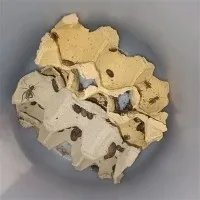

Hey there, fellow bird lovers! As a supplier of dried crickets for birds, I often get asked about the origin of these little critters. Well, let's dive right in and explore where these dried crickets come from and why they're such a great choice for our feathered friends.
The Natural Habitat of Crickets
Crickets are insects that belong to the Gryllidae family. They're found all over the world, from tropical rainforests to temperate grasslands. In the wild, crickets play an important role in the ecosystem. They're omnivores, which means they eat both plants and small insects. This diet makes them a rich source of protein, vitamins, and minerals, all of which are essential for the health of birds.
Most of the crickets that are used to make dried cricket products are farm - raised. This is because farming allows for better control over the cricket's diet, living conditions, and overall quality. Cricket farms are typically set up in a controlled environment where the temperature, humidity, and light conditions can be adjusted to mimic the crickets' natural habitat. This ensures that the crickets grow and develop in a healthy way.
The Process of Cricket Farming
Cricket farming starts with the eggs. Female crickets lay their eggs in a suitable substrate, and these eggs are carefully collected on the farm. Once the eggs hatch, the baby crickets, called nymphs, are transferred to special containers. Here, they're fed a diet that's carefully formulated to provide all the nutrients they need to grow. This diet usually consists of grains, vegetables, and sometimes even other insects.
As the nymphs grow, they molt several times. Each molt is a sign of growth, and after a few weeks, they reach adulthood. At this stage, they're ready to be harvested. The harvesting process is designed to be as humane as possible. The crickets are typically stunned using carbon dioxide before being processed.
Drying the Crickets
After harvesting, the next step is to dry the crickets. Drying is an important process as it helps to preserve the crickets and extend their shelf - life. There are different methods of drying crickets, but the most common ones are freeze - drying and air - drying.
Freeze - drying is a popular method because it helps to retain the nutritional value of the crickets. In this process, the crickets are first frozen at very low temperatures. Then, the frozen water in the crickets is removed through a process called sublimation, where the ice turns directly into vapor without going through the liquid phase. This results in a light, crispy product that still contains all the essential nutrients.


Air - drying is another method where the crickets are placed in a well - ventilated area with controlled temperature and humidity. This method takes longer than freeze - drying, but it's a more traditional and cost - effective way of drying the crickets.
Why Dried Crickets are Great for Birds
Now, you might be wondering why dried crickets are such a great food for birds. Well, first of all, as I mentioned earlier, crickets are a rich source of protein. Protein is essential for birds as it helps in building and repairing their muscles, feathers, and other body tissues.
Dried crickets also contain a variety of vitamins and minerals. For example, they're a good source of calcium, which is important for strong bones and eggshell formation in female birds. They also have vitamins like vitamin B12, which is crucial for the proper functioning of the nervous system.
Moreover, feeding birds dried crickets can stimulate their natural foraging behavior. In the wild, birds spend a lot of time searching for insects to eat. By offering them dried crickets, you're giving them a taste of their natural diet and keeping them mentally and physically active.
Other Uses of Dried Crickets
Dried crickets aren't just for birds. They have a wide range of other uses too. If you're interested in other applications of dried crickets, you can check out these links: Dried Crickets To Eat and Dried Crickets for Chickens. And if you have a leopard gecko, you might want to read about Feeding Leopard Gecko Freeze Dried Crickets.
Quality Control in Our Supply
As a supplier of dried crickets for birds, I take quality control very seriously. We have strict standards in place to ensure that the dried crickets we supply are of the highest quality. Before the dried crickets are packaged and shipped, they go through a series of inspections.
We check for things like the size, color, and texture of the crickets. We also test them for any contaminants or pathogens. Only the crickets that meet our quality standards are sent out to our customers. This way, you can be sure that you're getting a safe and nutritious product for your birds.
Contact Us for Purchasing
If you're interested in purchasing our high - quality dried crickets for your birds, I'd love to hear from you. Whether you're a small - scale bird owner or a large - scale aviary, we can provide you with the right quantity of dried crickets to meet your needs. Just reach out to us, and we can start discussing your requirements. Our team is always ready to answer any questions you might have and help you make the best decision for your feathered friends.
References
- Caparros Megido, M., Barroso, F. G., & Morales, P. (2014). Insects as potential novel sources of food in Europe. Trends in Food Science & Technology, 36(2), 141 - 150.
- Van Huis, A. (2013). Edible insects: future prospects for food and feed security. FAO.
- Oonincx, D. G. A. B., & De Boer, I. J. M. (2012). Environmental impact of the production of mealworms as a protein source for humans - a life cycle assessment. PLoS One, 7(12), e51145.