



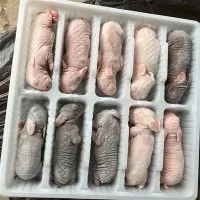
As a supplier of frozen rats, I often encounter the question of how to dispose of unused frozen rats. This is a crucial issue not only for environmental protection but also for maintaining the quality of our products and ensuring compliance with relevant regulations. In this blog, I will share some practical and scientific methods for disposing of unused frozen rats.
Understanding the Importance of Proper Disposal
Before delving into the disposal methods, it's essential to understand why proper disposal is so important. Frozen rats are commonly used as food for reptiles, such as snakes and lizards. However, if not disposed of correctly, they can pose significant risks to the environment and public health.
Unused frozen rats that are left to thaw and decompose can attract pests and vermin, which can spread diseases and cause damage to property. Additionally, the decomposition process releases harmful gases and chemicals into the environment, contributing to air and water pollution. By disposing of unused frozen rats properly, we can minimize these risks and protect the environment.
Methods of Disposal
There are several methods for disposing of unused frozen rats, each with its own advantages and disadvantages. The choice of method depends on various factors, such as the quantity of rats, local regulations, and available resources.
1. Incineration
Incineration is one of the most effective methods for disposing of unused frozen rats. It involves burning the rats at high temperatures, which destroys all organic matter and reduces the volume of waste. Incineration also eliminates the risk of disease transmission and reduces the environmental impact of the waste.


However, incineration requires specialized equipment and facilities, and it can be expensive. Additionally, incineration can produce air pollutants, such as dioxins and furans, which can be harmful to human health and the environment. Therefore, it's important to ensure that the incineration process is carried out in accordance with local regulations and environmental standards.
2. Landfill Disposal
Landfill disposal is a common method for disposing of unused frozen rats. It involves burying the rats in a landfill site, where they decompose over time. Landfill disposal is relatively inexpensive and easy to implement, but it has several drawbacks.
One of the main disadvantages of landfill disposal is that it takes up valuable land space and can contribute to soil and water pollution. Additionally, the decomposition process in landfills produces methane, a potent greenhouse gas that contributes to climate change. Therefore, it's important to minimize the amount of waste sent to landfills and to ensure that the landfill site is properly managed and monitored.
3. Composting
Composting is a natural process that involves breaking down organic matter, such as food waste and yard trimmings, into a nutrient-rich soil amendment. Composting can also be used to dispose of unused frozen rats, but it requires careful management and monitoring to ensure that the process is safe and effective.
To compost frozen rats, they should be thawed and cut into small pieces to speed up the decomposition process. The rats should then be mixed with other organic materials, such as leaves, grass clippings, and food waste, in a compost bin or pile. The compost pile should be turned regularly to ensure that the materials are well-aerated and to prevent the growth of harmful bacteria.
Composting is a sustainable and environmentally friendly method for disposing of unused frozen rats, but it requires time and effort to maintain. Additionally, it's important to ensure that the compost is used only for non-food crops, as there is a risk of disease transmission if the compost is used on food crops.
4. Recycling
Recycling is another option for disposing of unused frozen rats. Some companies specialize in recycling frozen rodents and other animal products into high-quality animal feed or fertilizer. Recycling can help to reduce the environmental impact of the waste and to conserve natural resources.
To recycle frozen rats, they should be collected and transported to a recycling facility. The rats are then processed into a variety of products, such as animal feed, fertilizer, and pet food. Recycling is a sustainable and environmentally friendly method for disposing of unused frozen rats, but it may not be available in all areas.
Best Practices for Disposal
Regardless of the method of disposal chosen, there are several best practices that should be followed to ensure that the process is safe and effective.
1. Store Frozen Rats Properly
To prevent the growth of harmful bacteria and to maintain the quality of the frozen rats, they should be stored at a temperature of -20°C (-4°F) or below. Frozen rats should be kept in a freezer that is dedicated to storing animal products and should be labeled clearly to avoid confusion.
2. Thaw Frozen Rats Safely
If the frozen rats need to be thawed before disposal, they should be thawed in the refrigerator or in cold water. Thawing frozen rats at room temperature can increase the risk of bacterial growth and can cause the rats to spoil.
3. Use Protective Equipment
When handling frozen rats, it's important to wear protective equipment, such as gloves and a mask, to prevent the spread of disease. Frozen rats can carry a variety of pathogens, such as bacteria, viruses, and parasites, which can be harmful to human health.
4. Follow Local Regulations
Before disposing of unused frozen rats, it's important to check local regulations and guidelines to ensure that the process is legal and compliant. Some areas may have specific requirements for the disposal of animal products, such as incineration or landfill disposal.
Conclusion
Disposing of unused frozen rats is an important issue that requires careful consideration and planning. By choosing the right method of disposal and following best practices, we can minimize the environmental impact of the waste and protect public health.
As a supplier of frozen rats, I am committed to providing high-quality products and ensuring that our customers have the information and resources they need to dispose of unused frozen rats safely and responsibly. If you have any questions or concerns about the disposal of frozen rats, please feel free to [contact us for further discussion and potential procurement opportunities]. We are always happy to help.
References
- Environmental Protection Agency. (n.d.). Solid Waste Management. Retrieved from [URL]
- World Health Organization. (n.d.). Food Safety. Retrieved from [URL]
- Pinks Rats
- Small Frozen Rats for Snakes
- Frozen Pinkie Rats