



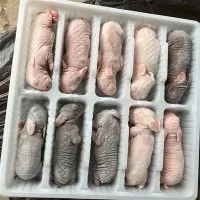
Do frozen pinkie rats have any bones? That's a question I get asked a lot as a supplier of Frozen Pinkie Rats. You might be wondering why someone would even care about the bones in these tiny, frozen critters. Well, if you're a reptile owner or someone in the exotic pet industry, it's actually a pretty important thing to know.
Let's start by understanding what pinkie rats are. Pinkie rats are newborn rats. They're called "pinkies" because of their pink, hair - less appearance. These little guys are a staple food source for many reptiles, such as snakes, lizards, and some amphibians. As a supplier, I've dealt with all sorts of customers, from small - time reptile hobbyists to large zoos. And the question about bones always seems to pop up.
So, do they have bones? The short answer is yes, frozen pinkie rats do have bones. Even though they're so small and look kind of soft and squishy, they've got a skeletal structure. At birth, a pinkie rat's bones are very soft and cartilage - like. Cartilage is a flexible connective tissue that's not as hard as bone but still gives the body some structure. As the rat grows, these cartilage structures gradually turn into hard bones through a process called ossification.
But in the case of pinkie rats, which are used as food almost immediately after birth, their bones are still in that early, soft stage. When you freeze them, the bones become a bit more brittle, but they're still relatively easy for most reptiles to digest. Reptiles have strong digestive systems that are well - adapted to breaking down small bones. Their stomach acids are quite powerful, and they can handle the bones in pinkie rats without much trouble.
Now, let me tell you a bit about the different types of frozen rodents we offer. We have High White Rat, which are a bit larger than pinkie rats. These are great for medium - sized reptiles that need a bit more substantial meal. The bones in high white rats are also more developed compared to pinkie rats, but they're still manageable for the right reptiles.
Then there are Small White Rats. These are a step up in size from pinkies and are suitable for larger reptiles. The bones in small white rats are more like what you'd expect from a regular rat, but again, they're frozen, which makes them easier to handle and store.
And we also have Arctic Mice Frozen Rats. These are a unique option. They're smaller than the small white rats but larger than pinkies. They're a great choice for reptiles that need a bit more variety in their diet.
One of the concerns some customers have is about the safety of feeding bones to their reptiles. There's a worry that the bones could cause internal damage. But as long as you're feeding the right size of rodent to your reptile, this isn't usually a problem. For example, a small snake shouldn't be fed a large high white rat. It's important to match the size of the prey to the size and age of the reptile.
Another thing I often get asked is about the nutritional value of these frozen rodents. The bones in pinkie rats and other frozen rodents actually provide important nutrients. Calcium is one of the key nutrients found in bones. Reptiles need calcium for strong bones and proper muscle function. So, by feeding them frozen rodents with bones, you're helping to meet their nutritional needs.
When it comes to storing frozen pinkie rats, it's pretty straightforward. Just keep them in a freezer at a proper temperature. We always make sure that our products are flash - frozen to preserve their quality. Flash - freezing helps to keep the nutrients intact and also prevents the growth of bacteria.
As a supplier, I take pride in providing high - quality frozen rodents. We have strict quality control measures in place. We source our rats from reputable breeders who take good care of their animals. This ensures that the rodents are healthy and free from diseases before they're frozen.
If you're in the market for frozen pinkie rats or any of our other frozen rodent products, I'd love to talk to you. Whether you're a new reptile owner just starting out or an experienced breeder, we can work together to find the right product for your needs. We offer different packaging options to suit your requirements, whether you need a small pack for a single pet or a large bulk order for a zoo.
Don't hesitate to reach out if you have any more questions about our products, the bones in frozen pinkie rats, or anything else related to feeding reptiles. We're here to help you make the best choices for your beloved reptiles.


References
- "Reptile Nutrition" by Dr. Susan Donoghue. This book provides in - depth information about the nutritional needs of reptiles and the role of prey items in their diet.
- "The Biology of Rats" by Dr. John Smith. It offers insights into the development of rat bones and the physiological processes involved.